


A Tribute to Ilianna, a Young Girl Whose Death in Unexplained Circumstances Still Calls for Answers

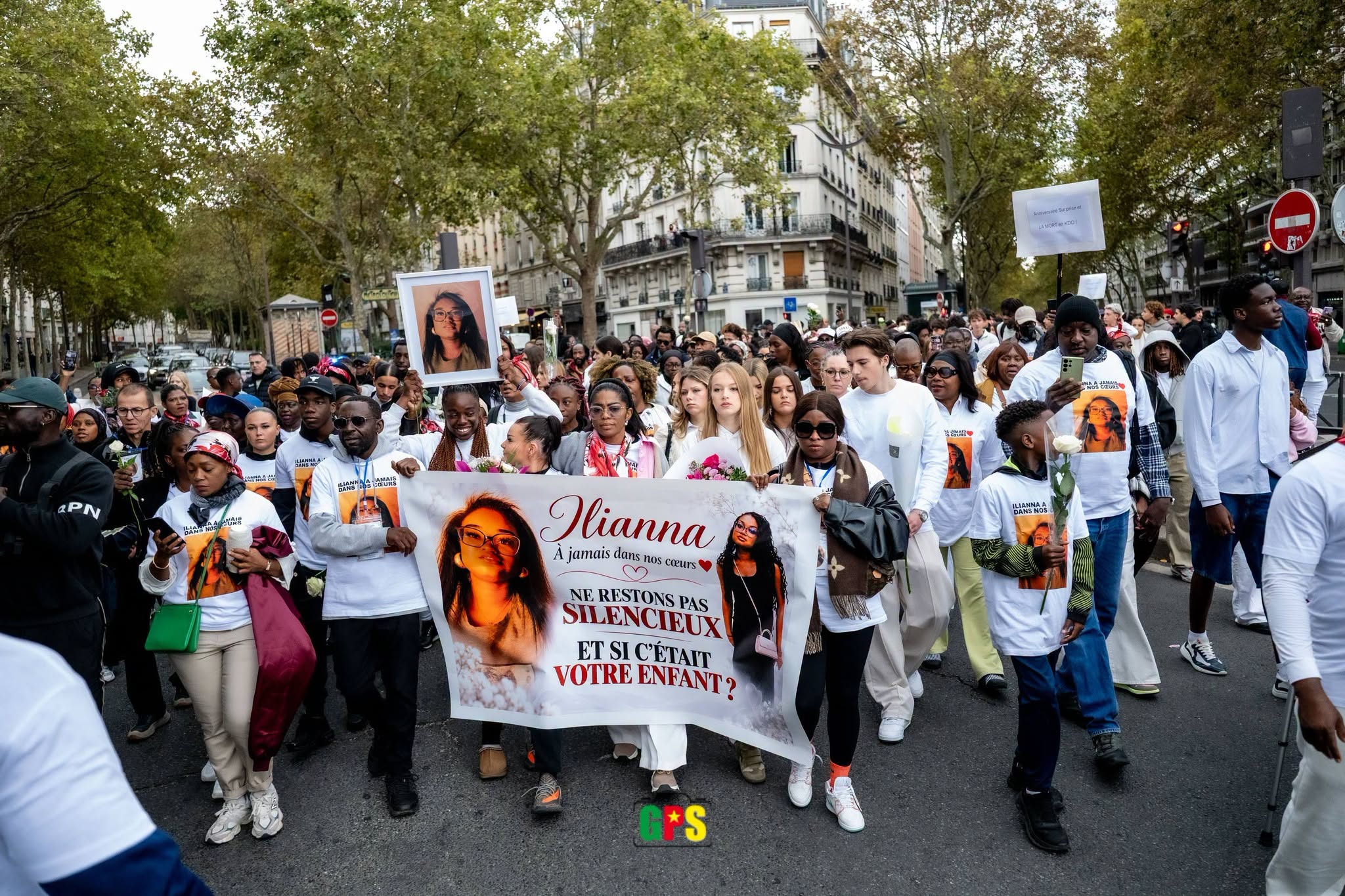
They had come in large numbers to the church, their hearts heavy, their faces darkened by a sorrow that words could no longer express. Parents, friends, acquaintances, and members of the Cameroonian community had gathered to attend the requiem Mass for Ilianna, the seventeen-year-old girl whose death continues to trouble so many hearts and minds. In the silence of the sanctuary, eyes met, tears flowed, and prayers rose toward heaven. Everyone seemed to be searching, amid the solemnity of that moment, for an answer to the terrible question that still hung over her coffin. How could a life so young, still filled with the promises of the future, have come to an end in such tragic circumstances? Ilianna was only seventeen years old. Seventeen springs, that age when life has barely begun to reveal its horizons, when dreams multiply and the first great hopes begin to illuminate existence with their brightest colours. She had gone to join friends for what had been presented as a surprise birthday party. Her mother, who loved her deeply, could never have imagined that this outing would be her last. A few hours later, news of her death would plunge an entire family into indescribable grief. According to the initial information reported, the young girl is said to have fallen from a building. Yet, to our knowledge, the exact circumstances surrounding this tragedy remain unexplained.

Amid the growing questions and the testimonies that still need to be clarified, only one certainty remains today. Ilianna will never return. What makes her death particularly painful, beyond its sudden and brutal nature, is the immense number of questions it leaves behind. What really happened during that evening? What were the final moments of this teenager’s life? Was she alone when the tragedy occurred? Had she experienced a moment of distress that no one had noticed? Did some external circumstance play a part in her fall? These are legitimate questions to which only a rigorous and impartial investigation may eventually provide answers. It would be unfair to accuse anyone without evidence, just as it would be regrettable to overlook any testimony that might contribute to establishing the truth.

Those who were present at the gathering may hold important information that could help clarify what happened, without their mere presence casting the slightest presumption of guilt upon them. We must also resist the assumption that a teenager who was loved by her family, surrounded by friends, and seemingly happy could never have experienced inner turmoil. At seventeen, a human being is going through a delicate period of life, filled with discoveries, contradictions, and emotions that can sometimes be difficult to express. Some forms of suffering remain invisible, even to the most attentive parents. Yet it would be equally reckless to attribute to Ilianna an intention that, at this stage, nothing allows us to establish. A fall, in itself, does not reveal the circumstances that caused it.

This is precisely why every word spoken about this case must be accompanied by caution. Respect for her memory demands that the search for truth prevail over rumours. Inside that church where her memory was being honoured, there was, above all, a mother. A mother before whom human consolation seemed almost meaningless. How can anyone explain to a woman who carried a child within her, accompanied her first steps, heard her first words, and watched over her first nights that she must now continue living without ever hearing her voice again? There are forms of pain that pass through the body without leaving visible wounds. The suffering of a mother who buries her child belongs to that category of grief before which literature itself seems to lose all its resources. Words become poor, speeches become useless, and gestures of affection seem insufficient. Sometimes, all that remains is the silent presence of loved ones, that discreet fraternity that allows a grieving person not to face the immensity of sorrow alone.

To see parents devastated before the coffin of their child remains one of the most heartbreaking images of the human condition. The natural order of generations would have children accompany their parents to their final resting place, not the other way around. Yet on that day, it was a teenager who was being accompanied toward eternity. A young girl who should have continued her studies, experienced the great emotions of youth, discovered the world, loved, and patiently built her future. Death interrupted her story before its most beautiful chapters could even be written. And in her mother’s eyes, one could imagine an entire library of memories now closed upon an absence. For many of us Africans, death has never been regarded as an absolute rupture between the world of the living and that of the ancestors. In many traditions, those who have departed continue to inhabit the family’s memory, to pass through dreams, and to accompany spiritually those who survive them. This understanding of existence, deeply rooted in our cultural heritage, teaches us that a human being does not disappear entirely when breathing ceases. A person remains in the gestures they made, in the words they spoke, and in the love they left behind. Some families thus find in dreams a form of consolation, sometimes even the feeling of encountering once again the person who has departed. These beliefs belong to the spiritual intimacy of peoples.

They may soothe grieving hearts, but they cannot replace the work of investigators or the evidence required to establish the circumstances surrounding a death. Ilianna’s passing should also lead us to reflect upon the protection of our youth. We live in societies where teenagers enjoy a freedom of movement, expression, and discovery that previous generations did not always experience. This freedom is a precious achievement, but it also calls for collective responsibility. Parents, educators, organisers of social gatherings, and young people themselves must learn to recognise dangerous situations, prevent risky behaviour, and develop a genuine culture of vigilance and solidarity. An evening among friends should remain a moment of joy, sharing, and carefree happiness, never the beginning of a tragedy. The purpose is not to condemn gatherings among young people, but to remind everyone that the protection of human life must remain a permanent concern. Today, the Cameroonian community shares the grief of this family. Behind this death lies far more than a news story. There is a mother who will have to learn to live with an empty chair, a silent bedroom, carefully preserved clothes, and photographs that have become witnesses to a happiness interrupted.

There are friends who will search for her face in their memories for a long time, classmates who will remember her words, and loved ones who may never understand why fate chose to strike a life so young. Solidarity must not end the day after the funeral. It is when the visitors have gone home, when messages of condolence become less frequent, and when the house returns to silence that this mother may need the presence of others most. We must hope that full light will be shed on the circumstances surrounding Ilianna’s death. Not to satisfy public curiosity, and certainly not to fuel premature accusations, but to allow her family, as far as possible, to know the truth. If responsibilities must be established, they must be established by the justice system, with full respect for the rights of everyone involved. And if this tragedy proves to have resulted from an unfortunate chain of circumstances, we must also have the courage to accept that conclusion. Truth cannot be chosen according to our emotions. It must be sought with patience, method, and honesty. This, too, is part of the respect we owe Ilianna. Little Ilianna, you were still at that age when seasons are counted in promises. You had not yet had the time to travel the long roads of existence or discover all the beauty and contradictions of the world. You left behind unanswered questions, but above all, an immense love that death can never erase.

Your mother will continue to find you in memories of your childhood, in family photographs, and in those places where your laughter once echoed. She will have the right to cry, to rebel against the incomprehensible, to search for answers, and to speak your name as often as her heart needs to. No one should impose a timetable upon her grief, because some absences never truly heal. With time, we simply learn to give them a place within our own existence. There is a philosophical truth that great tragedies remind us of with particular cruelty. We never truly possess those we love. We are merely granted the privilege of sharing with them a portion of the time given to us. Perhaps the greatness of love lies precisely in this fragility, in this ability to continue loving even when physical presence has disappeared. Ilianna lived for only seventeen years, but the value of a life cannot be measured solely by its duration. It is also measured by the depth of the bonds it created and by the place it continues to occupy in the memory of those who loved her. Rest in peace, little Ilianna.

May the earth rest lightly upon you, and may the prayers of those who loved you accompany you on your final journey. May your mother find, in the midst of this ordeal, fraternal hands to support her and hearts generous enough to embrace her sorrow. And may the truth finally shed light upon the circumstances of your departure, because no child should ever leave this world surrounded by so many unanswered questions. And when the last flowers upon your grave have faded, when the voices from the funeral ceremony have fallen silent and the days have resumed their course, your name will remain, softly spoken in the silence of a home. There will remain the memory of a seventeen-year-old girl who still had an entire life before her. Ilianna, only seventeen springs, and now an eternity in the hearts of those who love you.


